
Let's stop illustrating the problem: digital inclusion 30 years on
Updated: Apr 13
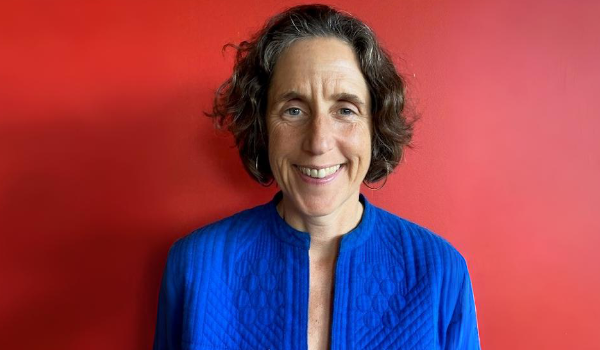
Written by Emma Weston OBE, this article explores digital inclusion in the UK and the ongoing barriers to full digital participation. It highlights how digital services still fail to work effectively for everyone, with challenges around access, usability, affordability and trust affecting millions of people.
The piece calls for coordinated, cross-sector action to close the digital divide, bringing together government, industry and the third sector. It emphasises the need for accessible design, reliable systems and practical support to ensure digital services work for all.
One of my favourite soundbites from a speaker on the stage at The Connected Project launch event in January was:
“Let’s stop illustrating the problem – let’s do something about it”
Emma Weston OBE
Chief Executive, Digital Unite

It’s only three months into Digital Unite’s 30th birthday year and the one thing I am being asked time and again is, “how do you feel about digital inclusion 30 years on?”
Well, I feel like that!
How can it be that 30 years later digital exclusion is not just still a huge issue but, I would argue, has actually got worse.
It’s worse because it’s more complex and that means that it will take more deliberate, creative and sustained efforts to fix.
I would suggest there are three reasons for that complexity.
‘Digital’ is ubiquitous; it shows up in just about every aspect of life, work and play. If you’re digitally excluded you’re not just disadvantaged when it comes to communicating and finding things out, you’re locked out of (and/or paying more for shopping, banking, benefits, health and social care. You’ll find it impossible to get a job (not just because they all require digital skills, but because you can’t find and apply for one without digital skills).
It’s inexorably linked to big systemic inequalities of money/ poverty, education/ literacy, marginalisation/difference. You’re more likely to be digitally excluded if you’re financially disadvantaged, have low literacy, have physical, sensory, cognitive or any other learning or health challenge.
And finally, although digital inclusion is a national imperative it’s also someone else’s responsibility. And it’s mostly considered to be ‘happening out there’ and will get fixed ‘out there’ through projects and interventions with short term objectives fueled by short term investment. And yet a recent LGA survey found that 44% of councils don’t have a Digital Inclusion Lead/Officer and only 13% have a digital inclusion strategy.

How then to ‘get on and do something about it’?
Treat it as a systemic, structural issue that is folded into the way we run organisations and businesses. And how we design and deliver products and services across public and private sector. Not as a series of stop/start projects but as a continuum. Every workplace can be a digitally inclusive workplace, staffed by people who are trained, and given time, to see that the work they do has a digital inclusion component to it, lean into that and mitigate the risks of exclusion.
Every interaction with a citizen as consumer or service user has the potential to further digital inclusion. Through this lens, digital inclusion is customer service underpinned by behaviour change in suppliers, whether public or private. Make Every Contact Count (MECC) – a methodology developed by Public Health England in 2008 to support healthy lifestyle behaviour change – can be equally well applied to digital inclusion and exclusion.
Treat digital inclusion as a necessary business investment, not as a ‘funding’ requirement. If we want digital customers and service users, we need to invest in them feeling skilled and confident to be so. Whether you are a council, a bank or a supermarket, whether you are a broadcaster or a utilities provider – or the government – you have a vested interest in this. 77% of councils said a lack of money and staff were the biggest impediments to driving digital inclusion. Only a systemic shift in its prioritisation - urgency – and other ways to relieve those pressures will change that.

At Digital Unite we support organisations – public and private – to develop (and ‘own’) their capacity to deliver digital inclusion in MECC style way through Digital Champions (DCs).
The model works: we've trained around 10,000 DCs in hundreds of organisations who've helped nearly a quarter of a million learners.
97% of those DCs recommend the training and support they got from us to make that impact.
I well know after 30 years that what limits the sustainability of that impact is the project based, time limited approach dictated, inevitably, by project based, time limited funding that has dominated these 30 years.
The only way to change that is by taking collective, conscious decisions to ‘change the lens’ both supply and demand side in relation to digital inclusion.
And to change the investment models that would make digital inclusion support a continuum for people.
That investment needs to come from a range of stakeholders who have skin in the game, who have that vested interest in digital customers and service users.
Governments have proved for the last 30 years that they can’t do this single handedly.
We do need leadership from Whitehall, an ability to really, truly embed digital inclusion across all departments within all agendas and in the processes and systems that impact citizen transactions with the State. ‘A watching brief,’ as they say.
Meanwhile …
The Connection Project is calling business and industry into the ring – as vested interests - to move the agenda faster and in a more agile, creative way.
It really could be the catalyst the UK needs to see, and do, things differently and shift the dial on digital exclusion. Including catalysing government focus and activities (and leveraging them? Or vice versa?)
At Digital Unite, we’d like to see business and industry investing in the MECC capacity of Digital Champions to drive the agenda systematically and sustainably.
Both in their own organisations and in the VCSE and public sector, and using levers they already have in CSR, ESG and social value commitments.
Which would make it one hell of a 30th birthday year in digital inclusion.


Comments